Let’s be honest—AZ-305 doesn’t feel like what you studied.
You go through Microsoft Learn, watch a few courses, maybe even pass practice quizzes… and then the real exam hits you with long case studies, confusing trade-offs, and multiple “correct” answers. Suddenly, everything feels different.
The biggest problem?
Most candidates are preparing for a theoretical exam, while AZ-305 in 2026 is clearly a decision-making exam.
And that gap—between what you study and what the exam actually tests—is exactly why so many people fail.
Let’s fix that.
🚀 What Actually Changed in AZ-305 (2026 Reality Check)
Shift Toward Architecture Thinking
The biggest shift in the AZ-305 exam is simple—but brutal if you miss it.
It’s no longer about what Azure service does.
It’s about why you choose it over another option.
According to the official exam page , candidates are expected to translate business requirements into solutions aligned with frameworks like the Azure Well-Architected Framework. That’s a huge clue.
You’re not just selecting services anymore.
You’re justifying decisions.
This means understanding trade-offs like:
- Cost vs performance
- Scalability vs simplicity
- Security vs usability
If you’re memorizing features without understanding when to use them, you’re already behind.
Governance and Cost Optimization Are Core
In 2026, governance isn’t a side topic—it’s everywhere.
You’ll constantly face questions like:
- Should you use Azure Policy or RBAC?
- How do you minimize cost across regions?
- What’s the best way to enforce compliance?
These aren’t theoretical questions. They’re business-driven decisions.
The exam expects you to think like someone responsible for enterprise-level cloud architecture, not just deployment.
Hybrid and Real-World Azure Scenarios
Cloud isn’t isolated anymore.
AZ-305 now heavily reflects hybrid architectures, including:
- On-prem + Azure integrations
- Disaster recovery across regions
- Migration strategies
You’re designing systems that actually exist in the real world—not perfect textbook setups.
Case Study Questions Dominate
This is where most candidates panic.
You’ll get long scenarios with:
- Business requirements
- Technical constraints
- Budget limitations
And then multiple questions tied to that single scenario.
This format forces you to retain context and think holistically—which is very different from traditional multiple-choice exams.
⚠️ Why Most Candidates Still Fail AZ-305
Over-Reliance on Microsoft Learn
Here’s the uncomfortable truth:
Microsoft Learn is necessary—but not sufficient.
It teaches concepts well, but it doesn’t simulate:
- Ambiguous scenarios
- Conflicting requirements
- Real exam pressure
Many candidates walk into the exam confident… and walk out shocked.
Confusing Design vs Implementation
This is the #1 mistake.
Many candidates think:
“AZ-305 is just a harder AZ-104.”
It’s not.
AZ-104 asks:
👉 How do you configure this?
AZ-305 asks:
👉 Why would you choose this over 3 other options?
That shift changes everything.
Lack of Scenario-Based Thinking
You might know:
- What Azure SQL does
- What Cosmos DB does
But can you answer:
👉 Which one fits a globally distributed, low-latency, cost-sensitive application with eventual consistency?
That’s the real exam.
Time Pressure from Case Studies
Case studies are time traps.
If you:
- Read everything slowly
- Overanalyze each option
You’ll run out of time.
And once you rush, your accuracy drops fast.
🧠 The Smartest Way to Prepare (2026 Strategy)
✅ Step 1: Build Architecture Thinking
Stop memorizing.
Start asking:
- Why this solution?
- What are the trade-offs?
- What happens at scale?
Think like an architect—not a technician.
✅ Step 2: Use Scenario-Based Practice
This is where most candidates improve dramatically.
Practicing realistic AZ-305 practice questions helps you:
- Understand question patterns
- Recognize traps
- Build decision-making speed
Many candidates benefit from reviewing realistic exam-style scenarios like those found here:
https://www.leads4pass.com/az-305.html
Not for memorization—but for understanding how questions are framed.
✅ Step 3: Combine Official + Practical Resources
Don’t rely on a single source.
Use a mix of:
- Official learning paths → Microsoft Learn AZ-305
- Azure architecture guidance → Azure Architecture Center
- Real-world scenario practice
That combination builds both knowledge and judgment.
Recommended Learning Resources
- Microsoft Learn (concept clarity)
- Azure Architecture Center (design thinking)
- Practice exams (real-world simulation)
Each one fills a different gap.
🔗 Certification Path Strategy
AZ-104 → AZ-305 → Architect Roles
Let’s clear something up.
Passing AZ-305 alone doesn’t give you the certification.
You also need AZ-104, as confirmed in official discussions .
The path looks like:
- AZ-104 → Learn implementation
- AZ-305 → Learn design
- → Become Azure Solutions Architect Expert
This progression matters because design requires implementation knowledge.
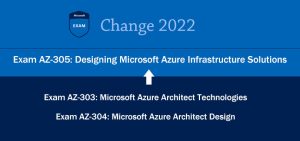
Transitioning from AZ-303/304
If you’re coming from older certifications:
- AZ-303/304 → AZ-305
The structure is similar, but the focus is sharper and more practical.
If you’re transitioning from older certifications like AZ-303/304, make sure to revisit updated architecture patterns and governance concepts.
📊 What Makes AZ-305 Different from Other Azure Exams
Comparison Table
| Aspect | AZ-104 | AZ-305 |
|---|---|---|
| Focus | Implementation | Design |
| Difficulty | Medium | High |
| Question Style | Direct | Scenario-based |
| Thinking Level | Operational | Strategic |
AZ-305 isn’t harder because of complexity.
It’s harder because of ambiguity.
💡 Practical Tips That Actually Work
How to Approach Long Case Studies
Don’t read everything upfront.
Instead:
- Skim requirements
- Read the question
- Go back for relevant details
This saves time and reduces overload.
How to Eliminate Wrong Answers
In many questions, 2 answers look correct.
Your job isn’t to find the right one first.
It’s to eliminate the wrong ones.
Ask:
- Does this violate constraints?
- Does it increase cost unnecessarily?
- Does it overcomplicate the solution?
Time Management Strategy
You don’t need perfection.
You need:
- Consistent pacing
- Quick decisions
- Confidence in trade-offs
If stuck, mark and move.
🧪 Final Thoughts: The Real Mindset Shift
Passing AZ-305 isn’t about knowing more.
It’s about thinking differently.
Most candidates fail because they prepare like engineers.
But the exam expects you to think like an architect.
And architects don’t chase perfect answers.
They choose the best possible solution under constraints.
That’s the real skill AZ-305 is testing.
❓ FAQs
1. Is AZ-305 harder than AZ-104?
Yes—but not because it’s more technical.
It’s harder because it requires decision-making under uncertainty.
2. How long should you prepare for AZ-305?
Typically 4–8 weeks if you already have AZ-104 knowledge.
Longer if you’re new to Azure architecture.
3. Are practice questions necessary?
Yes. They help you understand how scenarios are structured, which is critical.
4. Can you pass with only Microsoft Learn?
Possible—but unlikely for most people.
You need scenario-based practice.
5. What’s the fastest way to pass?
Focus on:
- Architecture thinking
- Scenario practice
- Real-world trade-offs
Not memorization.